
23 April 2026 | GENDRO & EASE
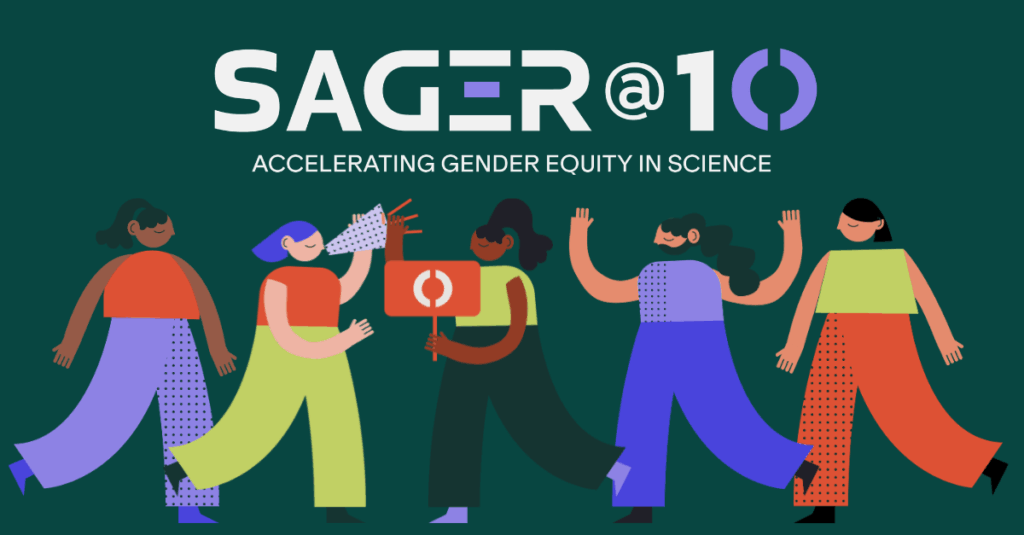
Geneva/London: This year marks the 10th anniversary of the publication of the Sex and Gender Equity in Research (SAGER) guidelines, one of the first global scientific frameworks to formally recognize biases in research and provide concrete tools and recommendations to address them.
Its special anniversary campaign sets an ambitious target: reaching 2 million accesses by the end of 2026. We invite all researchers, editors, and institutions to promote SAGER guidelines and embed them in their research plans and their evaluation processes.
Born out of a growing recognition that the systematic neglect of sex and gender in research design, analysis, and reporting, has been compromising scientific quality and contributing to inequitable health and societal outcomes, the SAGER guidelines were published in May 2016. The guidelines offer a unified framework for journals, publishers, and researchers to routinely consider and report sex and gender across disciplines with the goal of narrowing the gender evidence gap and strengthening scientific rigour, reproducibility, and transparency.
In ten years, the SAGER guidelines have recorded nearly 1.4 million unique accesses1, more than 1800 citations, and have been adopted by leading journals, including the Lancet, the BMJ, Nature, and Cell, and major publishers across multiple disciplines, spanning an estimated 9,000 journals. The guidelines have also been adopted by research institutions, including the World Health Organization and its latest addition of the Swiss Tropical and Public Health Institute, reflecting growing recognition of the SAGER guidelines as a research quality standard.
The guidelines have also been translated into Chinese, Korean, Vietnamese, Turkish, Portuguese, Spanish, German, and Italian.
The next milestone on this journey is to reach two million accesses from researchers, promoting the broader adoption of the SAGER guidelines among key stakeholders, including the leading 100 journals, 15 publishers, and the 20 most influential global public health institutions.
“At a time when gender equity is increasingly under pressure, this work is more critical than ever,” said Dr Shirin Heidari, Director of GENDRO and the lead author of the SAGER guidelines. “This anniversary is not just a moment for celebration; it is a call to accelerate implementation and deepen our collective commitment to equity in science.”
“The 10th anniversary of the SAGER guidelines marks an important milestone in strengthening trust in science through more transparent and inclusive reporting. By systematically addressing sex and gender considerations, these guidelines have improved the rigour, reproducibility, and relevance of research across disciplines,” said Dr Bahar Mehmani, President of EASE. “This aligns closely with EASE’s mission to advance editorial quality and support editors with practical standards that enhance the integrity of the scholarly record. As a global editorial community, we see the SAGER guidelines not only as guidance, but as a cornerstone for responsible and trustworthy research communication.”
Throughout 2026, GENDRO and EASE will collaborate with journals, publishers, professional societies, and global institutions to expand awareness, adoption, and implementation of the guidelines. Key activities include a global webinar on 5 May, a high-level anniversary event in Geneva on 18 May, held alongside the World Health Assembly, digital and outreach activities.
How to Get Involved
Journals, publishers, and research organizations are invited to support the #SAGER10 anniversary campaign in one or more of the following ways:
- Adopt the SAGER guidelines and take measures to implement it.
- Publish an editorial or Op Ed reflecting on the role of sex and gender considerations in strengthening research quality and share with us.
- Join the social media campaign using #SAGERguidelines and the anniversary special #SAGER10. If you have adopted the SAGER guidelines, share your experience with us as a quote or a short video on LinkedIn, or send it directly to info@gendro.org. We will re-post selected contributions on GENDRO’s LinkedIn.
- Bring SAGER guidelines to your country by volunteering to help us translate the SAGER guidelines into your national languages for a greater, inclusive reach.
Access the media kit for the 10th anniversary for the SAGER guidelines here.
Participate in the global movement to implement the SAGER guidelines in research practices globally, enabling better science, gender equality, and health equity for all.
About SAGER guidelines, EASE and GENDRO
The European Association of Science Editors (EASE) is a global community of scholarly editors and communication professionals, dedicated to building trust in research by raising editorial quality. Through expert resources, practical guidance, and a strong international network, we drive excellence in every stage of the editorial process.
GENDRO is a global non-profit organization dedicated to promoting gender-responsive, responsible, and inclusive research, bridging evidence gaps, challenging gender biases, and driving systemic change in the research ecosystem for tangible real-world impact.
In October 2012, the EASE Council — on the initiative of Council member Dr Shirin Heidari — established the Gender Policy Committee (GPC) to promote gender balance in scientific publishing and inspire more consistent reporting of sex- and gender-specific data in scientific journals, in response to a clear need: despite the evident relevance of sex and gender across research disciplines, editorial gender policies remained far from widespread. Following intensive deliberations and broad consultations, the EASE GPC published the Sex and Gender Equity in Research (SAGER) guidelines in 2016, as a practical tool for researchers, authors, journal editors, and publishers to embed the reporting of sex and gender dimensions into research as a matter of routine.
When the EASE GPC concluded its mandate in 2021, GENDRO assumed leading responsibility of the SAGER guidelines, continuing in close collaboration with EASE, to promote their wider dissemination and adoption. EASE remains a critical partner, continuing to lead the translation of the guidelines into multiple languages, making them accessible well beyond English-language journals. In 2026, GENDRO and EASE formalized this fruitful partnership through a Memorandum of Understanding, reaffirming their joint commitment to addressing gender evidence gaps in research.
Media Contacts
GENDRO
Sara Achik
Chetna Krishna Becker
EASE
Mary Hodgson
[1] Accesses is an approximate count of unique views and downloads, and citation counts are provided by dimensions and depend on data availability, based on the journal metrics. As such, the data is likely a conservative estimate. https://link.springer.com/article/10.1186/s41073-016-0007-6/metrics